Administrative Core

Organizational Structure

Organizational History and Evolution of CEED.

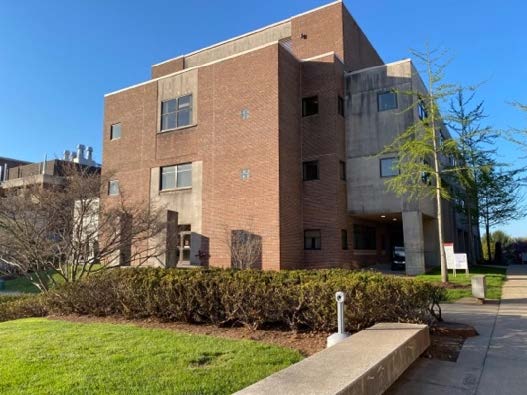
The Rutgers Center for Environmental Exposures and Disease (CEED) was established in 1987. Within Rutgers, it is the flagship program of environmental health research, training, clinical evaluation and treatment, and community engagement. CEED members come from 34 departments and 15 Schools within Rutgers University, Princeton University, Rowan University, and the New Jersey Institute of Technology. Concomitant with the awarding of the first NIEHS P30 grant was the founding of the Rutgers Environmental and Occupational Health Sciences Institute (EOHSI) with funds from the State. EOHSI is located in a 78,000 sq ft dedicated building. About 39,000 sq ft of the building is comprised of research laboratories that house only CEED investigators. An additional 14,000 sq ft is dedicated to CEED facility cores including 3,850 sq ft for the Environmental and Occupational Health Clinical Center that supports CEED clinical research.

CEED is the “engine that drives EOHSI”, providing resources, intellectual capital, and funding to train the next generation of environmental health scientists. The Center remains a multidisciplinary leader in research aimed at confronting illnesses and pathologies caused by environmental and occupational exposures to hazardous chemicals and biologics, and air pollutants, a platform for technology development and an interface for community engagement.

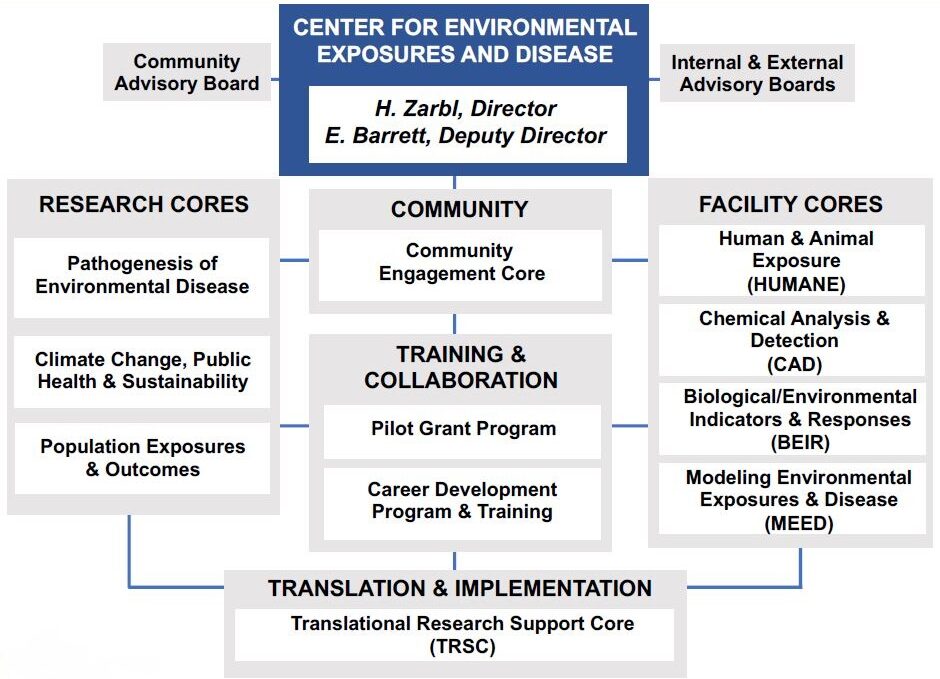
The IAB is comprised of the CEED Director and Deputy Director, as well as the EOHSI Director and the Directors of the Research and Facility Cores, Career Development Core, Pilot Project Program Directors, Translational Research Core (TRSC) and the Community Engagement Core (CEC). 

Currently, this includes 16 CEED leaders spanning 7 departments at Rutgers and Rowan University (see Budget Justification). The IAB plays key roles in the strategic, scientific, and operational management of the Center. Although the Director makes final decisions, they are based on input from CEED members, the IAB, and the EAB. This transparent and inclusive approach to conflict resolution and all administrative, fiscal, and scientific decisions, creates a collegial and interactive environment.

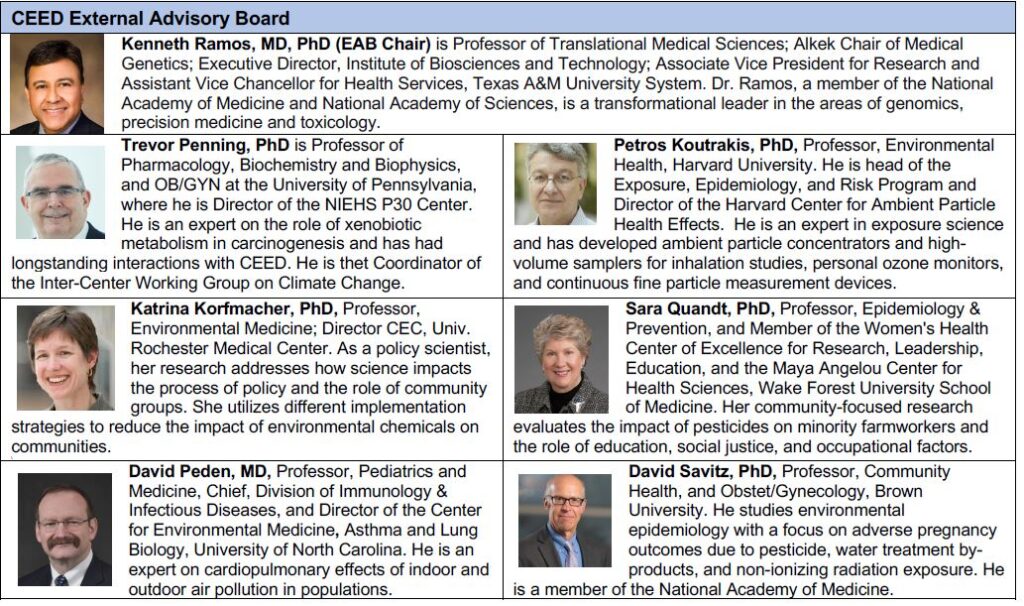
The EAB was selected based on their scientific expertise in priority areas, involvement in the NIEHS Core Centers Program, and diversity of experience and perspectives.

Membership on the EAB is typically for 3 years and is reviewed annually by the IAB. Due to their familiarity with our constraints during the pandemic, we retained the current EAB members for the entire grant cycle and most will continue to serve as we enter the next grant cycle, with one new member added to provide input on new areas of research/engagement (K. Korfmacher). At the end of an EAB member’s term or in the event of a resignation, recommendations for EAB membership will be solicited from CEED members, followed by IAB review, with appointment decisions made by the Director.

Copyright © 2024 – Rutgers, The State University of New Jersey

Copyright © 2025 Rutgers, The State University of New Jersey