

Modeling Environmental Exposures and Disease (MEED)

Modeling Environmental Exposures and Disease (MEED)

The Modeling Environmental Exposures and Disease (MEED) Facility Core provides computational support in quantifying exposures and biological processes associated with xenobiotics at the systems level, accounting for different system components, interactions, and functional states. In so doing, the Core facilitates the study of molecular mechanisms by which exposures contribute to the initiation and promotion of disease processes. The Core employs informatics methods and computational simulation tools that integrate mechanistic knowledge and data-derived information across several environmental and microenvironmental scales, as well as across multiple scales of biological organization (e.g., molecular, cellular, organ, organism, microbiome).

Core Director

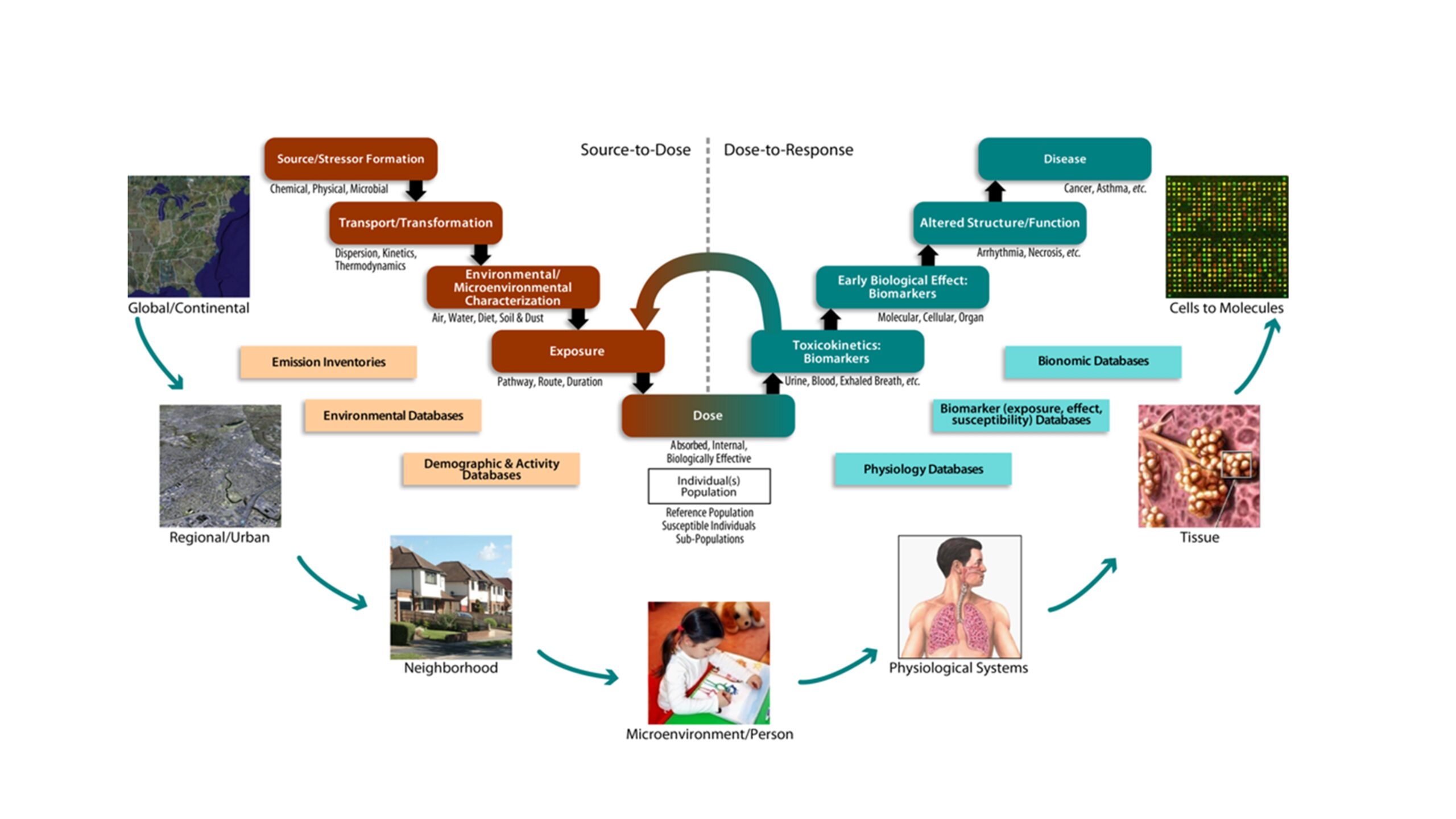
Schematic Depiction of the Source to Exposure to Dose to Response Continuum

Core Focus

The core supports the mentorship of early career trainees including multiple doctoral students and early career faculty who have been awarded NIEHS F31 fellowships K awards. Population Exposures and Outcomes Research Core meetings provide opportunities for these rising stars to receive early stage, constructive feedback on their research. The Population Exposures and Outcomes Research Core works closely with the Pathogenesis of Environmental Disease Research Core [hyperlink to other Core] in order to translate their findings from humans to causal mechanisms in model systems.
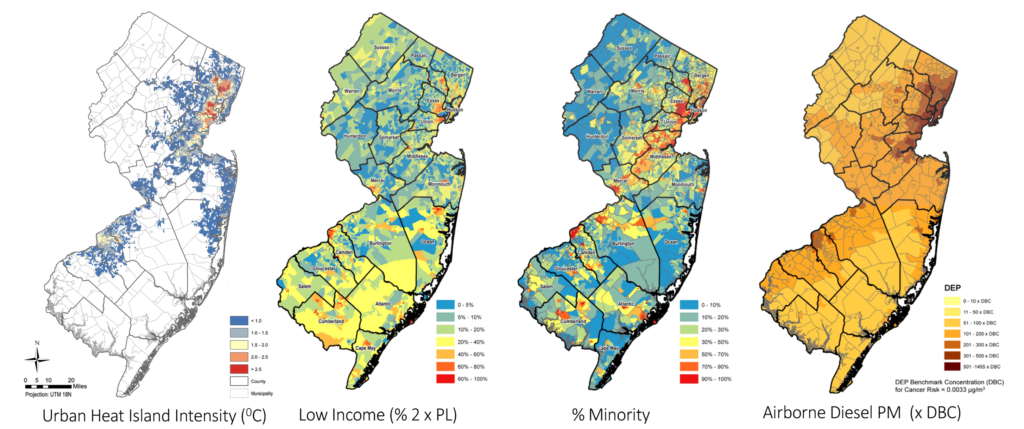
Over 100 geodatabases linked with a multi-model analysis framework allow comparative visualization and pattern analyses of environmental and socio-economic disparities at census block group level across the 565 municipalities.

Data Management and Sharing

MEED follows procedures consistent with the overall CEED data management and sharing plan; data used or derived by the Facility Core (including model inputs and outputs) are organized in databases residing on backed-up storage arrays that are either local (on the CCL servers housed in EOHSI) or housed at OARC

Exposure Modeling

  • Microenvironmental modeling
  • Residential, occupational, public, vehicular, etc. microenvironments
  • Cumulative and aggregate exposure modeling for individuals and populations – inhalation,  ingestion, dermal absorption
  • Modeling ecological impact of chemicals
  • Sentinel organisms; food web modeling
  • Life-Cycle Analysis of exposure to chemicals

Computational Toxicology

  • Biologically based dosimetry modeling – inhalation, dermal absorption, ingestion
  • Physiologically based toxicokinetic modeling (e.g., Metals, VOCs, Pesticides)
  • Mechanistic toxicodynamic modeling

Training and Education

MEED provides training and support to the research teams of CEED members (including graduate students and post-doctoral fellows) through either one-to-one or group-oriented sessions and workshops involving hands-on practicing in using software packages and databases maintained by the Core. Seminar-style presentations and demonstrations, either in-class or online, are also organized by the Core to inform CEED members and their teams on new computational modeling and data analytics capabilities that are available to them through MEED.
 

Mission

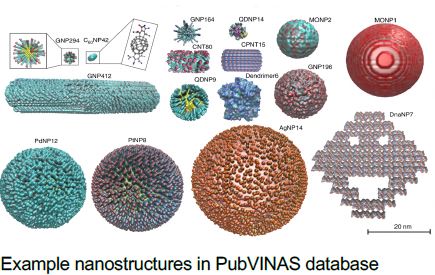
Nanostructures

Achieving CEED’s goals requires computational support, informatics expertise, and the integrative analysis of large, heterogeneous data sets from multiple sources, using emerging science, engineering, and technology. These data include health outcomes and exposure-relevant information from CEED researchers as well as from public and proprietary sources. 

To better assess and evaluate health outcomes, CEED investigators may need to model specific mechanisms involved in the sequence of processes connecting “stressor to exposure to dose to effect” across many environmental and biological scales. The Modeling Environmental Exposures and Disease Facility Core (MEED) fills these needs by providing access to: (a) high-level data integration and analytics; and (b) mechanistic systems modeling tools that can estimate exposure and dose, and identify or predict early biological responses and indicators, for the purpose of designing intervention and prevention strategies to modify disease risk.

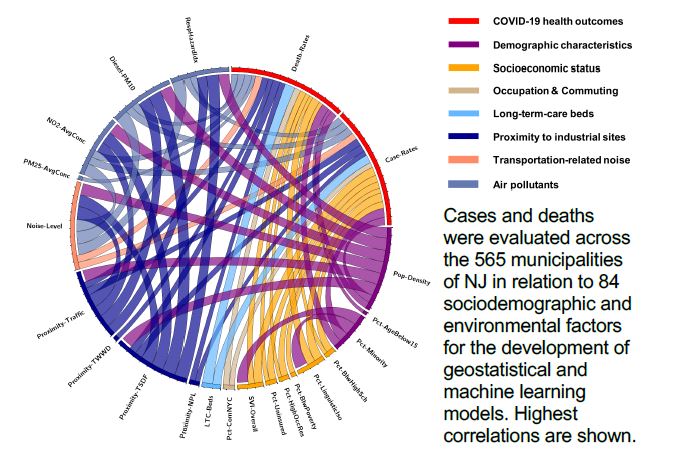
Exposure-Wide Association Studies of COVID-19 outcomes

MEED Core Services

The goal of this Core is to provide support in quantifying exposures and biological processes associated with xenobiotics at the systems level, accounting for different system components, interactions, and functional states. 

MEED utilizes the resources of the EOHSI CCL, a scientific computing facility focused on data analytics and multiscale modeling of environmental and biological systems and of their interactions, with applications ranging from simulating impacts of changing environmental conditions on human exposures to physiologically-based pharmacokinetic and pharmacodynamics modeling. 

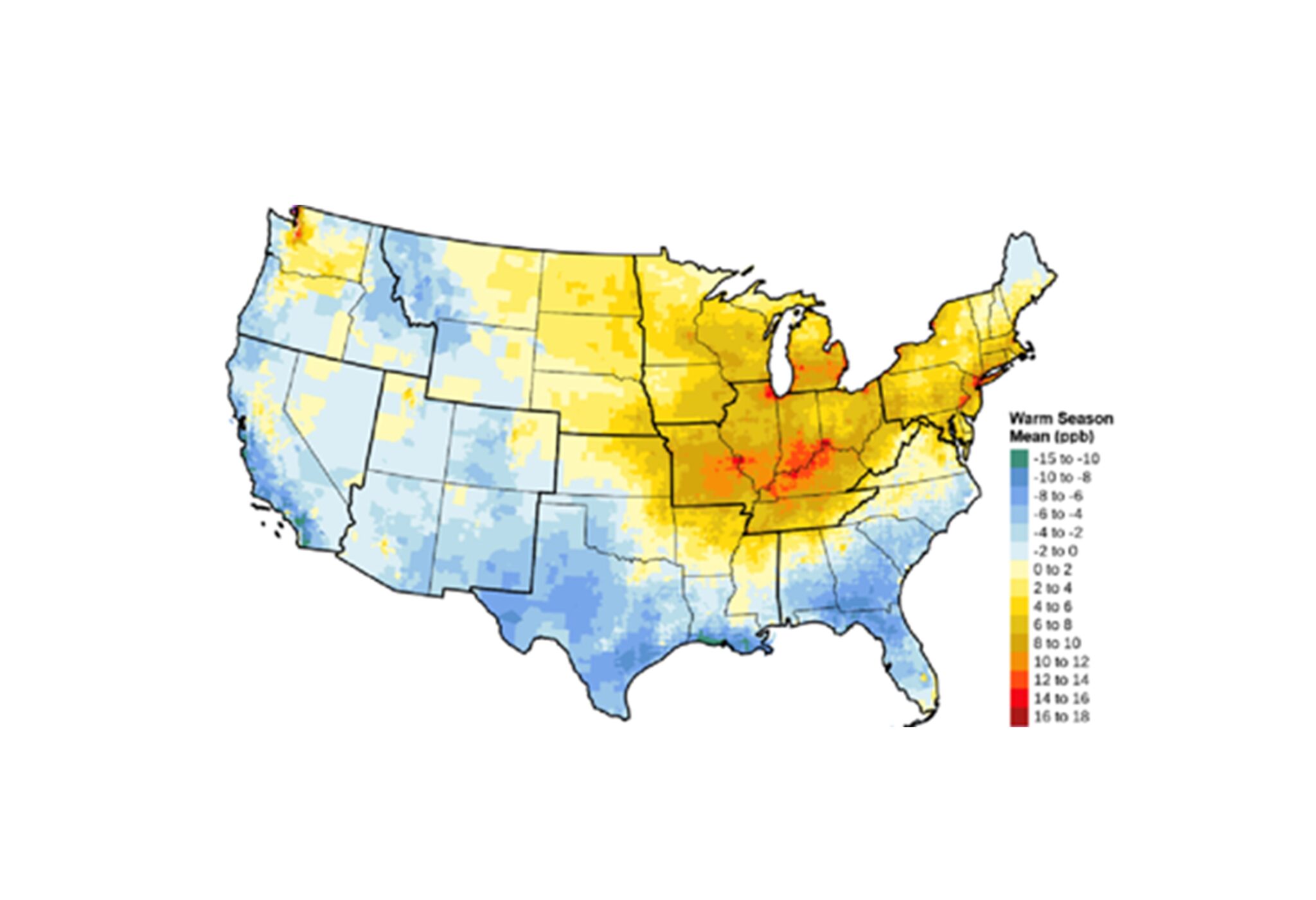
Predicted Warm Season Ozone Changes

MEED follows procedures consistent with the overall CEED data management and sharing plan; data used or derived by the Facility Core (including model inputs and outputs) are organized in databases residing on backed-up storage arrays that are either local (on the CCL servers housed in EOHSI) or housed at OARC

  • Microenvironmental modeling
  • Residential, occupational, public, vehicular, etc. microenvironments
  • Cumulative and aggregate exposure modeling for individuals and populations ú Inhalation,  ingestion, dermal absorption
  • Modeling ecological impact of chemicals
  • Sentinel organisms; food web modeling
  • Life-Cycle Analysis of exposure to chemicals
  • Biologically based dosimetry modeling – inhalation, dermal absorption, ingestion
  • Physiologically based toxicokinetic modeling (e.g., Metals, VOCs, Pesticides)
  • Mechanistic toxicodynamic modeling

MEED provides training and support to the research teams of CEED members (including graduate students and post-doctoral fellows) through either one-to-one or group-oriented sessions and workshops involving hands-on practicing in using software packages and databases maintained by the Core. Seminar-style presentations and demonstrations, either in-class or online, are also organized by the Core to inform CEED members and their teams on new computational modeling and data analytics capabilities that are available to them through MEED.
Recent Core Publications

Kelesidis G.A., Moularas C., Parhizkar H., Calderon L., Tsiodra I., Mihalopoulos N., Kavouras I., Korras-Carraca M-B., Hatzianastassiou N., Georgopoulos P.G., Cedeño Laurent J.G. and Demokritou P. (2025) Radiative cooling in New York/New Jersey metropolitan areas by wildfire particulate matter emitted from the Canadian wildfires of 2023. Communications Earth & Environment, 6(1), 304. PMCID: PMC12011623

Ren X., Mi Z. and Georgopoulos P.G. (2023) Socioexposomics of COVID-19 across New Jersey: A comparison of Geostatistical and Machine Learning approaches. Journal of Exposure Science and Environmental Epidemiology, PMCID: PMC9889956

Ren X., Cai T., Mi Z., Bielory L., Nolte C.G. and Georgopoulos P.G. (2022) Modeling past and future spatiotemporal distributions of airborne allergenic pollen across the contiguous United States. Frontiers in Allergy: Sec. Environmental & Occupational Determinants, Special Issue on Climate Change and Allergic Disease) PMCID: PMC9640548

Ren, X., Mi Z., Cai T., Nolte C.G. and Georgopoulos, P.G. (2022) Flexible Bayesian Ensemble Machine Learning Framework for predicting local ozone concentrations. Environmental Science & Technology, PMCID: PMC9133919 

Yu C.H., Weisel C.P., Alimokhtari S., Georgopoulos P.G. and Fan Z. (2021) Biomonitoring: A tool to assess PFNA body burdens and evaluate the effectiveness of drinking water intervention for communities in New Jersey. International Journal of Hygiene and Environmental Health 235 113757. PMID: 33962122

Contact

Panos Georgopoulos:

H. Zhu: zhuh@rowan.edu

170 Frelinghuysen Road

Piscataway. NJ 08854
